
Self-Publishing vs Traditional Publishing: Which route fits your book?

Self-publishing offers authors greater creative control, faster publication and potentially higher royalty percentages, but requires upfront investment and responsibility for production and marketing. Traditional publishing provides professional support, established distribution and potentially an advance, but involves a competitive selection process and less creative control. The best choice depends on the author’s goals, budget and target audience.
How to write a memoir: 6 steps to turn your life story into a book

This article explores six practical steps to writing a memoir that captures your unique voice and connects with your audience. From choosing a central theme and organising your memories to creating vivid scenes, developing a narrative structure and handling sensitive family stories, you’ll discover how to turn real-life experiences into engaging nonfiction.
You’ll also learn why memoir writing doesn’t have to follow chronological order, how to overcome writer’s block, and why honesty, reflection and perseverance are essential.
Whether you’re writing to inspire others, share lessons learned or preserve your family legacy, your story deserves to be told. With the right guidance, you can transform your memories into a book.
Audio, digital, physical and interactive: 4 ideas for publishing your child’s book

There’s something incredibly special about a young writer seeing their name on the cover of a published book. But once your child has written their story, another question appears: what’s the best way to publish it?
This article explores four exciting options for publishing your child’s book: physical books, ebooks, audiobooks, and interactive or activity books. But there is no single format that suits every young writer.
The article encourages parents to consider their child’s personality, the type of book they’ve written and what they hope to achieve. Most importantly, children should be involved in the decision. Publishing isn’t simply about producing a book. It can teach creativity, perseverance, communication, confidence and ownership, while giving young writers the extraordinary experience of saying: “I wrote that.”
How beta readers can help your manuscript before you hire an editor

You’ve finished your manuscript, revised it, reread it and reached the point where you’re simply too close to the story to see what isn’t working. That’s where beta readers can be invaluable.
This article explains how beta readers act as test readers for a near-finished manuscript, helping authors discover plot holes, pacing problems, confusing character motivations, weak openings and unsatisfying endings before investing in professional editing.
10 reasons your novel progress has stalled (and how to finally finish your book)

Every writer knows the feeling. You begin your novel full of excitement, only to hit a wall halfway through. Suddenly the words stop flowing, self-doubt creeps in, and finishing your book feels impossible.
In this article, I explore the 10 most common reasons writers get stuck, from perfectionism and imposter syndrome to the dreaded “messy middle,” shiny new ideas, lack of routine, plot problems, and research rabbit holes.
More importantly, I share practical strategies to overcome each obstacle and regain momentum so you can finish your book.
If your manuscript has been gathering dust, this guide will help you identify what’s really stopping you and give you the confidence to finally type those two magical words: The End.
4 Self-Publishing Options for Your First Book: Audio, Digital, Physical, and Interactive
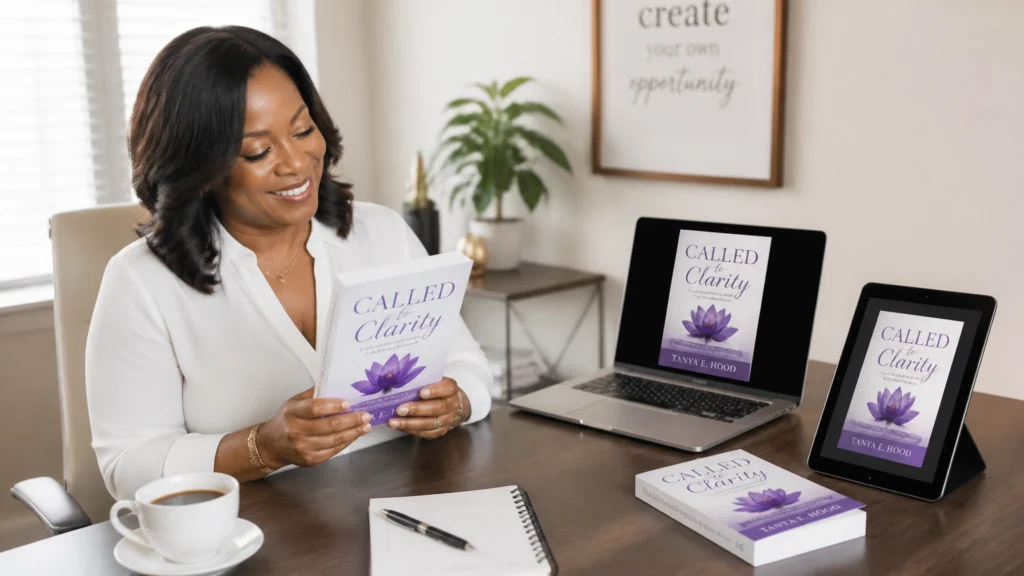
In this practical guide, author, publisher and writing coach Tolulope Popoola explores the four main self-publishing formats available to today’s authors and explains the advantages and disadvantages of each. You’ll learn which formats offer the greatest reach, the highest royalties, the strongest credibility, and the best opportunities to grow your author brand.
The article also explains why you don’t need to publish every format at once, offering a simple publishing roadmap that helps new authors launch strategically without becoming overwhelmed. Whether you’re writing fiction, memoir, children’s books or business books, you’ll discover how to choose the publishing format that best serves your readers and your long-term goals.
The Legacy Project: Why your children and grandchildren need you to write your memoir

This article encourages parents, grandparents, and older adults to preserve their life stories as a lasting gift for future generations. It challenges the belief that only extraordinary lives are worth writing about, arguing that everyday experiences, family history, personal values, and lessons learned are often the most meaningful stories of all.
The article explores how memoir writing helps pass down family heritage, wisdom, resilience, and identity. It highlights research showing that children who know their family history tend to have stronger self-esteem and emotional resilience. Readers are encouraged to see their book as a legacy project that preserves their voice, experiences, and values for children and grandchildren.
7 Mistakes you’re making with a blank page (and how to fix them)

This article tackles one of the biggest challenges writers face: the dreaded blank page. The fear of the blank page is often caused not by a lack of ideas, but by habits and mindsets that sabotage progress before the writing even begins.
The article identifies seven common mistakes writers make. For each mistake, practical solutions are offered, such as embracing messy first drafts, focusing on progress over perfection, and trusting your natural voice.
The key message is simple: writing a book is not about brilliance or perfection. It’s about persistence, consistency, and showing up even when the page is blank. The only way to defeat the blank page is to start writing.
Memoir or Business Book? Helping professional women choose the right format for their story

This article helps professional women decide whether their story is best suited as a memoir, a business book, or a hybrid of both. It explains that a memoir focuses on personal transformation, emotional truth, and life experiences, while a business book is designed to teach, solve problems, and establish authority in a specific field.
For many women, the ideal solution is often a business memoir – a book that combines powerful personal stories with practical lessons and professional expertise. The article encourages aspiring authors to think carefully about their goals, audience, desired impact, and level of personal vulnerability before choosing a format.
It also addresses the common trap of overthinking and procrastination, reminding writers that clarity often emerges through the writing process itself. Ultimately, the message is simple: your story has value, and the most important step is to start writing.
7 Reasons Why Authors Should Have a Blog (And How to Set One Up)

Starting an author blog is one of the smartest investments an aspiring writer can make. Unlike social media, your blog is a platform you own, giving you a permanent home to showcase your work, build your author brand, and connect directly with readers.
The article explains seven key benefits of blogging, including building an author platform, improving writing consistency, showcasing your skills, testing new ideas, growing a loyal audience, establishing yourself as an expert, and creating future opportunities such as speaking engagements, coaching, and book sales.
It also offers practical advice on choosing the right blogging platform, securing a domain name, creating essential website pages, and developing a realistic content schedule. Finally, it encourages both adult and young writers to begin blogging before their book is finished, allowing them to build an engaged audience ready for launch.
How to write a book and get published (without losing your mind)

Dreaming of writing a book? In this practical guide, author, publisher and writing coach Tolulope Popoola explains what it really takes to go from a blank page to a published book.
The journey starts long before you send a manuscript to literary agents. It begins with reading widely, developing your writing skills, understanding your unique voice, researching your topic, and committing to regular writing. Along the way, you’ll discover why revision is where great books are truly made, why learning about the publishing industry gives you an advantage, and why perseverance is the one quality every successful author shares.
Why you’re not too old to start writing that book

Your years of living aren’t just background noise; they’re your raw material. Every job you’ve hated, every relationship that taught you something, every mistake that made you wiser, that’s all fodder for your writing. In non-fiction especially, deep knowledge of your subject matter is essential. You might not have possessed that expertise in your twenties or thirties. Now you do.
Why research is important even for fiction writers

Research isn’t just for non-fiction writers. Even fantasy and science fiction, genres that seem to have complete creative freedom, rely heavily on research to create believable worlds.
Neuroscience Shows Reading Fiction is Stimulating

Have you ever become so absorbed in a novel that the real world felt different when you finally looked up? It turns out that feeling isn’t just your imagination. Research shows that reading fiction literally changes the way your brain works.
This article explores the fascinating science behind storytelling, explaining how novels strengthen neural connections, improve empathy, boost creativity, reduce stress, and even help protect long-term cognitive health. You’ll discover why reading is often described as a “workout for the brain” and how stepping into the lives of fictional characters helps us better understand ourselves and others.
How to stop starting several projects and finally finish your book

This article tackles a common struggle for creative writers: having too many ideas and not finishing any of them. While starting new projects feels exciting, unfinished manuscripts can’t be published, read, or make an impact.
Interview with our latest author, Ola Ademola-Adesanoye
Today we are featuring an interview with Ola Ademola-Adesanoye, our latest author! She has just published her debut novel, titled “Everything and Nothing”. Find out more about Ola, and read her thoughts on writing and publishing. Please tell us a bit about yourself. I am a middle child, this certainly contributed to me finding books. […]
Interview with Olachi Okoroafor – Author of “Amaka in New York”

We’re featuring an interview with ten-year old Olachi Okoroafor, who has just published her debut novel, “Amaka in New York”. This is so exciting, as she’s our youngest author ever! Read on to find out more about her and read her thoughts on writing and publishing.
Ten-Year-Old Author launches Debut Novel, “Amaka in New York”

Accomplish Press is pleased to announce the official publication of “Amaka in New York”, a debut novel by 10-year-old author, Olachi Okoroafor.
“What If My Work is Rubbish?” Self-Doubt is a Struggle.

Hello creative people! I hope you are having a great day and week. Those of us in Lagos have enjoyed the rain since the beginning of the week, but thankfully today has been quite sunny! Grateful for little mercies! Today, I’m going to talk about something that ALL writers face, whether you’re working on your […]
Coming soon! Two New Titles from Accomplish Press
New Titles from Accomplish Press Accomplish Press is very proud to announce that we will soon be releasing two new awesome titles! We’ve been working with these two ladies over the past few months, and we’re sure you’ll love their work. We can’t wait to share them with you! “Thorns and Roses” by Amaka […]