

Nowadays, it’s never been easier to get your book out there, but it’s also never been harder to get noticed. With millions of books flooding platforms like Amazon every year, the harsh reality is that readers have endless choices, and they’re not going to stick around for a book that feels amateur or unpolished.
When you’ve poured your heart into your manuscript, spent months (maybe years) crafting every scene, the idea of handing it over to someone else for critique feels terrifying. Plus, professional editing isn’t cheap, and when you’re already investing in cover design and marketing, it’s tempting to think, “I’ll just run it through spell-check and call it good.”
But that’s a mistake that could tank your entire author career before it even starts.
The brutal truth about reader expectations
Let’s talk about what happens when readers encounter an unedited book. They don’t think, “Oh, this is self-published, so I should lower my expectations.” They judge your book against every other book they’ve read: including those from major publishing houses with entire editorial teams.
Here’s what I’ve seen happen to authors who skip professional editing:
- Readers abandon the book within the first chapter due to confusing plot points or clunky sentences
- Negative reviews focus on “poor editing” and “needs a proofreader” rather than story content
- Sales stagnate because word-of-mouth recommendations never materialise
- The author’s confidence takes a hit, sometimes derailing future writing projects
I’ve seen new self-published authors who learned this the hard way. An author published her debut novel without professional editing, convinced that her English degree meant she could catch her own mistakes. The book received 17 one-star reviews in its first month, with readers complaining about plot holes, inconsistent character motivations, and distracting grammatical errors. She pulled the book, invested in developmental and copy editing, and re-released it six months later. Same story, professional polish: and suddenly those reviews shifted to four and five stars.

What professional editing actually does (hint: it’s not just about grammar)
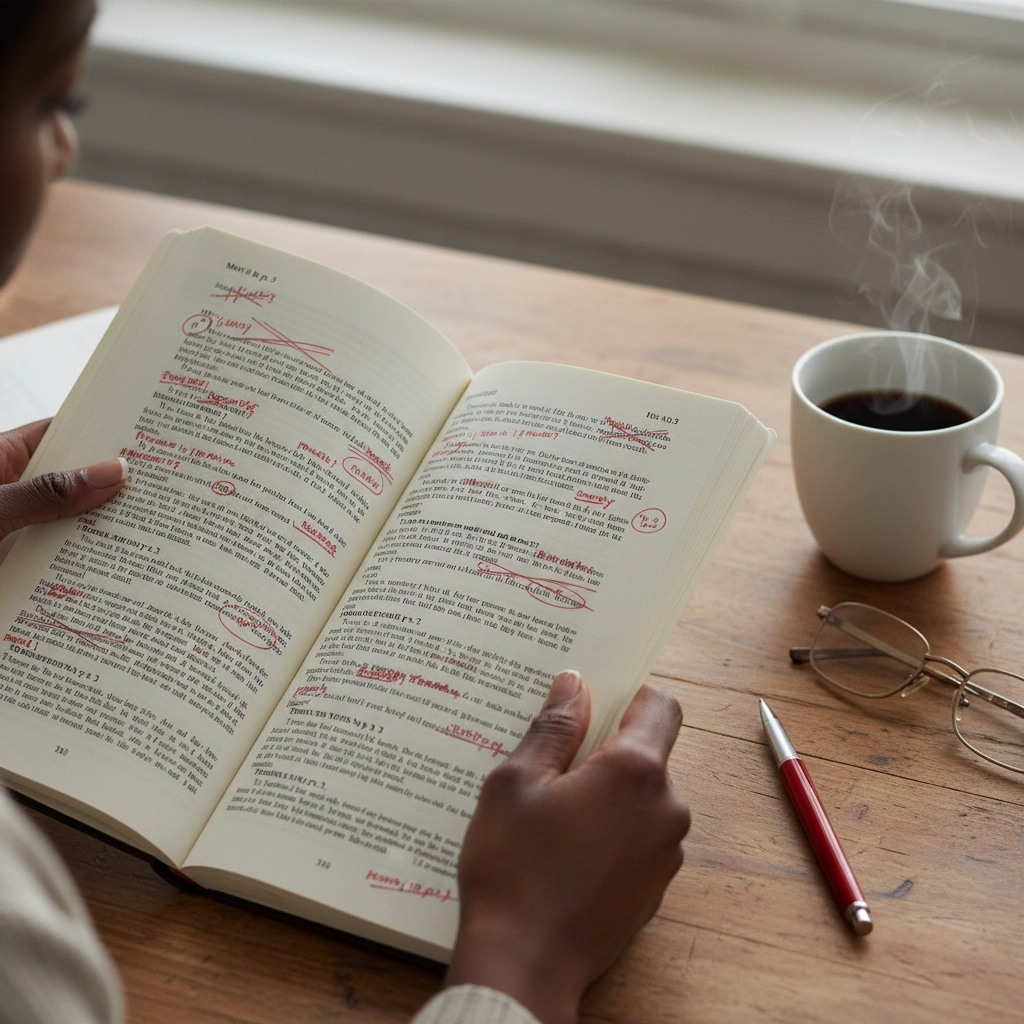
Most aspiring authors think editing is about catching typos and fixing comma splices. That’s like thinking a personal trainer only counts your reps. Professional editing operates on multiple levels:
Developmental editing: the big picture stuff
This is where an editor looks at your story structure, character development, pacing, and plot logic. They’ll catch things like:
- Characters who disappear halfway through the book
- Plot threads that start strong but never resolve
- Scenes that drag or feel rushed
- Motivations that don’t quite make sense
A developmental editor might say something like, “Your protagonist makes this huge decision in Chapter 8, but we never see what drives that choice. Readers need to understand her internal conflict here.”
Copy editing: the sentence-level magic
This is where your prose gets polished until it shines. Copy editors don’t just fix grammar: they improve clarity, eliminate redundancy, and help your unique voice emerge more clearly. They’ll transform sentences like this:
Before: “The weather was really bad and stormy, with lots of rain falling down heavily on the streets that were getting very wet.”
After: “Rain hammered the streets, turning them into rivers.”
Line editing: making every word count
Line editors focus on the rhythm and flow of your writing. They’ll catch awkward phrasing, repetitive word choices, and sentences that just don’t sing. This level of editing is what separates amateur-sounding prose from professional-quality writing.
The “author blindness” problem
Every writer needs to accept this: you cannot effectively edit your own work. I don’t care how many writing courses you’ve taken or how many books you’ve read: you’re too close to your own story to see its problems clearly.
You know what you meant to write, so your brain fills in gaps that might confuse readers. You understand your character’s backstory so well that you forget to actually put crucial details on the page. You’ve read your opening chapter fifty times, so you can’t tell that it’s actually boring to someone encountering it fresh.
I call this “author blindness,” and it affects everyone from first-time novelists to bestselling authors. The only cure is getting objective eyes on your manuscript: preferably eyes that belong to someone trained to spot story problems and prose issues.
The different types of editing (and why you probably need all of them)
Most successful self-published authors go through multiple rounds of editing. Here’s the typical process:
- Developmental edit first – Fix the big structural issues
- Copy edit second – Polish the prose and fix grammatical problems
- Proofread last – Catch any remaining typos in the final formatted version
Trying to do all three at once doesn’t work. It’s like trying to renovate your kitchen while also choosing paint colours and shopping for new appliances. You need to tackle problems in the right order, or you’ll end up redoing work and missing crucial issues.
What about online editing tools and AI?
Grammarly and AI editing tools are useful: they can catch obvious errors and suggest improvements. But they can’t tell you that your protagonist’s character arc falls flat in the third act, or that your romantic subplot feels forced, or that your dialogue sounds like robots talking to each other.
These tools are like spell-check on steroids: helpful for surface-level problems, but they can’t replace the trained eye and storytelling expertise of a professional editor who understands narrative structure and reader psychology.
How much should you budget for editing?
This is the question that makes most aspiring authors wince, and I get it. Professional editing is expensive: typically ranging from $1,000 to $5,000 depending on your book’s length and how much work it needs.
But think about it like this: this isn’t an expense, it’s an investment in your author career. A professionally edited book will:
- Earn better reviews, leading to more sales
- Build reader trust in your brand as an author
- Give you confidence to market your work aggressively
- Teach you writing techniques that will improve all your future books
Think of it like learning to play guitar. You could try to teach yourself, but working with a skilled instructor will help you progress faster and avoid developing bad habits that are hard to break later.

Working effectively with your editor
Once you’ve decided to invest in professional editing, here’s how to make the most of that relationship:
Be specific about your goals. Are you looking to traditionally publish eventually? Writing for a specific genre audience? Hoping to launch a series? Your editor needs to understand your objectives.
Don’t take feedback personally. Your editor isn’t criticizing you as a person: they’re helping you make your story the best it can be. I’ve seen too many authors get defensive about suggestions and miss opportunities to genuinely improve their work.
Ask questions. If you don’t understand why your editor suggested a change, ask for clarification. A good editor will explain their reasoning and help you learn in the process.
Implement changes thoughtfully. You don’t have to accept every suggestion, but don’t dismiss feedback without serious consideration. Remember, your editor is representing your future readers’ perspective.
The long game: building your author career
Publishing one good book isn’t the goal. Building a sustainable author career is the goal. And that means every book you publish needs to meet professional standards and deliver on reader expectations.
The authors who succeed in self-publishing aren’t necessarily the most talented writers: they’re the ones who approach publishing as a business and invest in the same professional services that traditional publishers provide in-house.
In my work as a writing coach at Accomplish Press, I see this pattern repeatedly. Authors who invest in professional editing, cover design, and strategic marketing consistently outsell those who try to cut corners, even when the “corner-cutters” start with stronger raw talent.
Your next steps
If you’re convinced that professional editing is worth the investment (and I hope you are), here’s your action plan:
- Finish your first draft completely before seeking an editor
- Do at least one self-edit pass to catch obvious issues and save money
- Research editors in your genre and request sample edits
- Budget appropriately and understand that quality editing takes time
- Prepare mentally to see your work with fresh eyes and be open to significant changes
The path to successful self-publishing isn’t about taking shortcuts: it’s about making smart investments in your craft and your career. Professional editing isn’t optional if you’re serious about building a readership and establishing yourself as an author worth following.
If you’re ready to take your manuscript to the next level, I’d love to help you navigate the world of professional editing and manuscript preparation. Whether you’re looking for one-on-one guidance as your book writing coach or want to take my self-publishing course, I’m here to support you through every stage of your author journey. You can also get started by downloading a copy of my new guide for self-publishing authors, to help you start on the best note. Because the truth is, great books aren’t just written: they’re crafted, polished, and refined until they’re impossible to put down.