

It’s wonderful for any parent: you notice your child loves writing. He or she isn’t just scribbling for a school assignment, but they’re actually writing. Maybe they’ve filled several notebooks with stories, or perhaps they spend their weekends crafting intricate poems or fan fiction about their favourite game characters. Maybe they’re always reading, then writing alternative endings to the stories they have read. Maybe they have even expressed the desire to write a book one day.
When a child discovers a passion for storytelling, it’s like watching a new world open up. But once the initial excitement wears off, many parents find themselves asking: What now? How do I support a budding author without being overbearing? How do I help them improve without crushing their spirit?
At Accomplish Press, we’ve worked with dozens of young writers: including some as young as ten who have gone on to publish their own books. We know that this stage is delicate. You want to fan the flames of their creativity, you want to encourage their dreams, but you’re not sure how.
Here is my guide on what to do next when you realise you have got a talented young writer in your house.
1. Take their “writer” status seriously
The most important thing you can do right now is a mindset shift. Stop seeing their writing as just a “cute hobby” and start seeing it as a craft. When a child plays soccer, we buy them the kit, the boots and take them to practice. When they play an instrument, we hire a tutor and pay for lessons. Writing deserves that same level of respect.
Believe them when they say they are a writer. Ask them about their characters as if they are real people. Ask about the world-building in their stories. When you show genuine interest in the mechanics of what they’re creating: rather than just saying “that’s nice, dear”: you’re telling them that their ideas have value.
2. Create a dedicated writer’s sanctuary
Every writer needs a place where the magic happens. It doesn’t have to be a sprawling home office; it could just be a specific corner of the dining table or a desk in their room.

Give them the tools that make the process feel special. This might include:
- High-quality notebooks: Sometimes a fresh, bound journal is more inspiring than a pack of loose-leaf paper.
- A no-interruption zone: Writing requires deep focus (what we call “the flow state”). Agree on a signal: maybe a “Do Not Disturb” sign or a specific lamp being on: that means they are in the middle of a chapter and shouldn’t be interrupted for chores or dinner for at least 30 minutes.
- Digital tools: If they prefer typing, ensure they have a safe, distraction-free space on a laptop. Programs like Scrivener or even just a dedicated Google Drive folder can help them stay organized.
3. Fuel the fire with reading
A great writer has to be an avid reader. Reading is the “research and development” phase of writing, it fuels their ideas, their imagination and their creativity.
If your child loves writing, buy them age-appropriate books and series. Take them to the library regularly to read and borrow books. Let them read books they like, but also a wide variety of books they may not naturally gravitate towards, books outside of their comfort zone. If they love fantasy, encourage them to try a biography or a mystery. Exposure to different voices, pacing, and structures will naturally bleed into their own work. And try not to judge their choices. Even if they’re reading graphic novels or magazines, they’re still learning how stories are paced and how dialogue works.

4. Don’t let grammar kill the vibe
At this stage, the goal is expression, not perfection. There is plenty of time for editing later. When they show you a story, focus on the plot, the emotions, and the “big ideas.” If you see a spelling mistake, let it go (for now). If they ask for feedback, keep it constructive and focused on the story. You might say, “I loved how the hero escaped the cave, but I was a little confused about how he got the magic key. Could you tell me more about that?”
5. Share and champion their work proudly
If your child is writing regularly, don’t keep that achievement tucked away like it doesn’t matter. Celebrate it properly. Share their work with family, friends, and even supportive neighbours if your child is comfortable with that. Print out a poem, a short story, or the first chapter of their book and keep it somewhere visible in the house.
Treat their writing with the same pride you would give to a sports trophy, a music certificate, or a good school report. When children see their words being valued and displayed, it sends a powerful message: this matters. That kind of encouragement builds a huge amount of confidence and helps them take themselves seriously as a writer.
6. Explore the world of writing competitions
Once your child has a few finished pieces, they might be ready to share them with a wider audience. Competitions are a fantastic way to build discipline and learn how to write to a prompt or a deadline.
Look for reputable, low-pressure contests. Many libraries and children’s magazines hold annual competitions. The goal isn’t necessarily to “win” (though that’s a nice bonus!), but to learn the author’s journey from the first draft to the final submission.
Be prepared for the reality of rejection. It’s part of the job. If they don’t place in a contest, use it as a teaching moment. Explain that even the most famous authors: like J.K. Rowling or Stephen King: were rejected dozens of times before they found success. It’s not a reflection of their talent; it’s just part of the process.
7. Consider professional writing coaching
Sometimes, a parent isn’t the best person to give feedback. Sometimes kids are more receptive to advice from a professional than from Mum or Dad. This is where a writing coach comes in. A coach provides:
- Structured feedback: They can explain why a scene isn’t working and give the child tools to fix it.
- Accountability: Having a regular check-in encourages kids to keep writing even when they hit a writer’s block wall.
- Ideas and Brainstorming: A writing coach can support your young writer with putting different ideas together, or expanding on what they have started but perhaps got stuck on.
- Skill Building: We teach them about things like setting, story arcs, character motivation, and “showing, not telling.”
At Accomplish Press, our Creative Writing Club for Kids is designed specifically for this. We create a safe, supportive space where young writers can thrive among peers who enjoy reading and writing, and a tutor who understands exactly how it feels to be a young person with a writing talent. Writing can be a lonely business. Often, kids who love writing feel like the “odd one out” in their peer groups. That’s why we created the club where they can be themselves and explore whatever wild, creative, imaginations they come up with.
And no, we don’t do boring lectures. Instead, we use games, prompts, and collaborative exercises to help them build their own worlds.

What should you do today?
Start small. Ask your child what they’re working on. If they’re hesitant to share, tell them you’d love to hear just one sentence about their main character. Let them know that you are interested and supportive. Writing is a marathon, not a sprint. If your child has the passion and the drive to do this “writing thing,” then they’ve already done the hardest part. Your job is just to be the wind beneath their wings. And if you’ve done all that, it’s time to get professional help.
The next step: Young Writers Summer Storytelling Camp
If your child is ready to take their writing to the next level this summer, I have something special for them: the Young Writers Summer Storytelling Camp. It’s an intensive, fun and inspiring creative writing workshop where kids and teens can dive deep into the craft of storytelling.
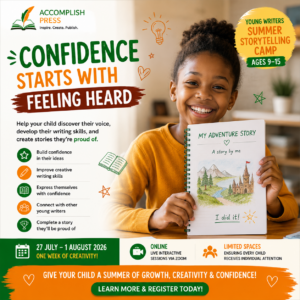
It’s a great way for children and teens to build confidence, develop their storytelling skills, and spend time in a creative, encouraging environment with other young writers.
If your child enjoys reading, making up stories, or wants help getting their ideas onto the page, this could be a lovely next step.
Click here to find out more about the Young Writers Summer Storytelling Camp.
Let’s turn your child’s writing dreams into reality this summer.