

Summer holidays are coming soon (and for some, they are already here)! For many parents, this means a sudden shift from the school routine to finding ways to keep the kids occupied. If you have book-loving kids aged between the ages of 9 and 15, you might think your job is easy: just give them a stack of novels and let them get on with it, right?
While reading is a fantastic way to spend the summer, I’ve found that even the most avid readers can eventually hit a “book slump” or get a bit restless. Instead of just letting them consume stories passively, why not encourage them to step into the stories?
At Accomplish Press, we’re all about helping writers (of all ages!) turn their love for stories into something tangible. Whether they want to write their own book or just explore their favorite fictional worlds more deeply, these indoor activities are perfect for those rainy afternoons or quiet mornings.
Here are some creative, resourceful ways to keep your book-loving kids engaged this summer.
1. Create a “book trailer” (the movie preview approach)
Think of this as the literary version of a movie trailer. Most book-loving kids in the 9 to 15 age bracket are already tech-savvy and comfortable with apps like TikTok, Instagram, or basic video editors like iMovie or Canva.
Creating a book trailer requires them to think critically about the story’s “hook.”
How to do it:
- The Script: Ask them to choose four to six key moments from a book they recently finished. They need to write a short script or voice-over that teases the plot without giving away the ending.
- The Visuals: They can draw their own scenes, take photos of objects that represent the story, or use royalty-free stock footage.
- The Sound: Adding a dramatic soundtrack or sound effects makes it feel “official.”
- The Premiere: Have a family “film festival” night where they can show off their trailer on the big screen (or just the living room TV).
This isn’t just “playing on the computer”; it’s a lesson in pacing, marketing, and storytelling.
2. Character scrapbooking: a deep dive into personality
Does your child have a “fictional best friend” or a character they can’t stop talking about? A character scrapbook is a brilliant way to explore that character’s psyche.

Instead of a traditional book report, which: let’s be honest: can feel like homework, a scrapbook is a creative project.
What to include:
- The “artifacts”: What would be in this character’s pockets? They can draw or create a “lost” train ticket, a map of their neighborhood, or a recipe they love.
- Quotes: Find three quotes that define the character.
- Journal entries: Write a “hidden” diary entry from the character’s perspective about a scene that wasn’t in the book.
- Mood board: Clippings from magazines or printouts from Pinterest that match the character’s “vibe.”
This activity helps kids understand character development and motivation: essential skills if they want to join our Creative Writing Club for Kids and Teens.
3. Rewrite the ending (the “what if?” factor)
We’ve all been there: you finish a book, and you’re absolutely fuming at how it ended. Or maybe it was just a bit too predictable. In my opinion, some of the best writing comes from the desire to “fix” a story.
Encourage your child to pick a book and rewrite the final chapter. What if the hero made a different choice? What if the villain actually won?
Try these variations:
- Swap the POV: Rewrite the ending from the perspective of the sidekick or the antagonist.
- The Epilogue: Write a scene set five years after the book ends. What is the protagonist doing now?
- The Genre Flip: Take a realistic story and rewrite the ending as a sci-fi twist.
Writing alternate endings is a great bridge into fan fiction, which is how many professional writers first started practicing their craft. It takes away the “blank page” fear because the world and characters already exist.
4. World-building: maps and travel brochures
If your child is a fan of fantasy or dystopian novels, they are already familiar with detailed world-building. Mapping out these worlds helps them notice the details of setting and atmosphere.

The Project:
Have them create a “Travel Brochure” for the setting of their favorite book. If they were trying to “sell” a holiday to the Capitol in The Hunger Games or a trip to Hogwarts, what would they highlight?
Include:
- “Must-see” locations: Where did the most important scenes happen?
- Local customs: What do people eat? How do they dress?
- Warning labels: What are the dangers for travellers?
- A hand-drawn map: Labelling the topography of the fictional world.
This helps kids understand that setting isn’t just a background: sometimes it’s a character in its own right.
5. Book-to-movie casting director
This is a fun, low-pressure activity that gets the whole family involved. If their favorite book was being turned into a Hollywood movie (or a Netflix series), who would they cast?
The Steps:
- The casting board: Choose actors for each major role. They can’t just pick “famous” people; they have to justify why that actor fits the character’s description and personality from the text.
- The costume design: Draw or find images of what the characters would wear in the big-screen version.
- The poster: Design the official movie poster.
I’ve seen kids spend hours on this, debating with their siblings about which actor has the right “energy” for a role. It forces them to go back to the text to look for physical descriptions and personality traits.
6. Start a book review blog or Bookstagram
For the older kids (12-15), starting a public-facing (or private) platform for their thoughts can be incredibly empowering. It gives them a sense of authority and a real-world audience.
At Accomplish Press, we’ve helped kids as young as 10 publish their own books. Having a place to share their voice is the first step toward that kind of confidence.
How to start:
- Platform: Use a safe, simple site like Blogger, or create a private Instagram/TikTok account where they can post short reviews.
- The format: Encourage them to go beyond “I liked it.” Ask them to rate the plot, the characters, and the writing style.
- The community: Encourage them to look up other “Bookstagrammers” or “BookTubers” for inspiration on how to style their photos.

Moving from reading to writing
Summer is the perfect time to explore these “indoor adventures.” You don’t need a lot of expensive equipment: just a few good books, some notebooks, a laptop, and a bit of imagination.
If you notice your child is particularly drawn to these activities, it’s a sign they might have a story of their own to tell. I often tell parents that the difference between a child who “likes to read” and a “young author” is simply the encouragement to take that next step.
These activities are “side doors” into creativity. They lower the stakes and make writing feel like a game rather than a task.
If your child is ready to move from these holiday creative activities into something more structured, I’d love to help. We offer several paths for young writers:
- Creative Writing Club for Kids and Teens: These are weekly sessions (held on Saturdays and Sundays) where I work with groups of kids to develop their storytelling skills, build their confidence, and help them find their unique voice.
- Young Author Accelerator: For the child or teen who already has a manuscript or a serious goal of publishing a book, this is a more intensive coaching path.
Are you looking for a fun and structured way to support your child’s creative journey this summer?
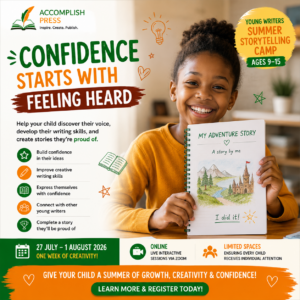
I’d love to invite your young writer to join the Young Writers Summer Storytelling Camp. It’s a great way for children and teens to build confidence, develop their storytelling skills, and spend time in a creative, encouraging environment with other young writers.
If your child enjoys reading, making up stories, or wants help getting their ideas onto the page, this could be a lovely next step.
Click here to find out more about the Young Writers Summer Storytelling Camp.
Let’s turn your child’s writing dreams into reality this summer.