

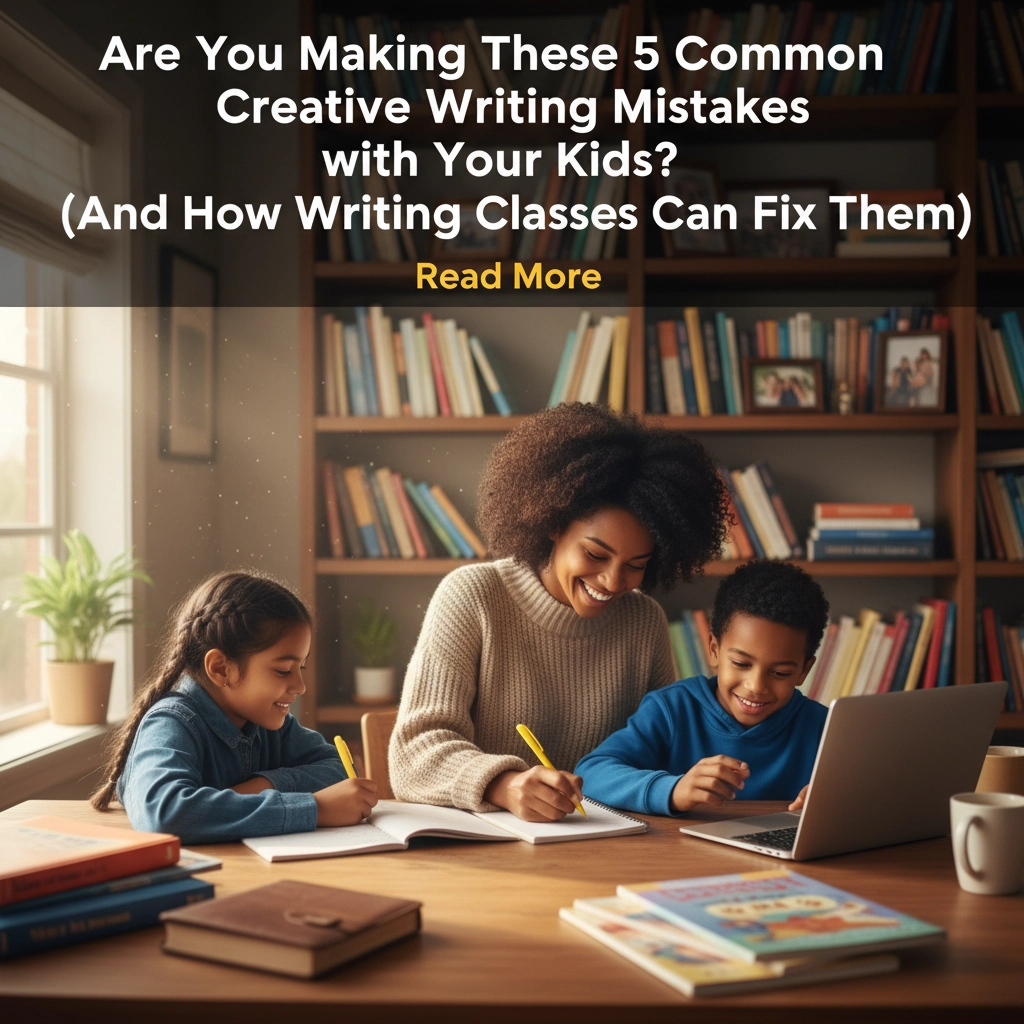
As a parent, you want to nurture your child’s creative writing spark. You celebrate their stories, encourage their imagination, and maybe even dream of them becoming the next great author. But here’s the thing: sometimes our well-meaning support can accidentally squash that creative fire we’re trying to fan.
I’ve seen it countless times: enthusiastic parents who inadvertently turn writing from a joyful exploration into a dreaded chore. The good news? These mistakes are completely fixable, and recognizing them is the first step toward raising a confident young writer.
Mistake #1: Jumping on every spelling error
Picture this: Your 8-year-old bounds over with their latest masterpiece: a thrilling tale about a dragon who befriends a unicorn. But instead of celebrating the imaginative plot, you immediately point out that they spelled “dragon” as “dragn” and forgot to capitalize the first word.
Sound familiar? This is probably the biggest creativity killer out there.
When we correct every small error during the creative process, we’re essentially telling kids that technical perfection matters more than their ideas. Suddenly, they’re more worried about spelling “because” correctly than they are about what happens next in their story.
The fix: Focus on what’s working. Celebrate the creative choices: the interesting character names, the unexpected plot twists, the vivid descriptions. Save the editing for later (much later). A great creative writing class for kids understands this balance perfectly, creating an environment where rough drafts are celebrated and polishing comes as a separate, later stage.
Mistake #2: Forcing adult story structures too early
“Remember, sweetie, every good story needs a beginning, middle, and end.”
While story structure is important, imposing these rules too rigidly can stifle young creativity. Children’s minds work differently: they might start with a dragon in a volcano and end with ice cream being eaten by a llama, and that’s perfectly fine.
These seemingly nonsensical connections often contain brilliant creative leaps that adults have trained themselves out of making. When we insist on traditional narrative structures from the get-go, we risk shutting down their natural storytelling instincts.
The solution: Let their originality flourish first. A good kids writing coach knows when and how to introduce story elements gradually, respecting developmental stages while building craft skills. They’ll teach structure when children are ready to understand and apply it, not when adults think they should.
Mistake #3: Turning into the grammar police mid-story
Nothing kills creative momentum quite like launching into a lecture about verbs and adverbs while your child is in the middle of describing their superhero’s adventures.
Here’s the reality: your child is already learning grammar extensively at school. During creative writing time at home, they need something different: they need their ideas to come alive.
Instead of explaining why they need more descriptive adjectives, try acting out their stories with toys, discussing characters during relaxed moments, or reading their work aloud in funny voices. These activities bring stories to life in ways that grammar lessons simply can’t.
Why this matters: Creative writing for kids should feel different from schoolwork. Creative writing classes for young writers understand this distinction, focusing on bringing ideas to life rather than drilling technical skills that are better learned in other contexts.
Mistake #4: Information overload disguised as enthusiasm
Your daughter writes about mermaids, so you immediately pull up Pinterest boards, order three books about ocean mythology, and start sharing stories from your own childhood about mermaid dreams.
This enthusiasm is beautiful: and completely overwhelming.
While you mean well, flooding kids with external resources can actually paralyze their creativity. Suddenly, they’re worried about whether their mermaid matches the “real” mythology or whether their story idea is original enough.
The better approach: Be subtle. Hint that you have interesting information but wait to be asked. Let them pursue their curiosity at their own pace. An effective creative writing class provides curated inspiration at just the right moments, giving children enough stimulus without drowning their original vision.

Mistake #5: Demanding finished products every time
Your son designs an amazing book cover, writes an intriguing first paragraph, then… stares out the window. Your instinct might be to push: “Come on, finish the story!”
But here’s what you need to know: not every creative spark needs to become a finished product, especially for young writers.
Children might have incredible beginnings and lose interest halfway through: and that’s developmentally normal. They’re still building the stamina and organizational skills needed for longer projects. Forcing completion too early can make writing feel like work rather than play.
The truth: The process matters more than the product at this stage. A skilled creative writing coach who works with children understands these developmental stages and helps kids gradually build stamina for longer projects while celebrating shorter experiments.
How Writing Classes Fix These Mistakes (And Why Parents Can’t Always Do It Alone)
Here’s something that might be hard to hear: even with the best intentions, it’s difficult for parents to avoid these mistakes consistently. We’re too close to our children, too invested in their success, and often too eager to help.
Professional writing coaches and structured creative writing courses provide several advantages:
Emotional distance: A writing instructor can celebrate rough drafts without the parental urge to immediately improve them.
Developmental expertise: They understand when children are ready for different concepts and can introduce craft elements at the perfect moment.
Peer community: Writing classes connect kids with other young writers, normalizing the creative process and reducing the pressure to impress parents.
Structured freedom: Good programs provide just enough structure to build skills while maintaining the joy and freedom that makes writing appealing.
At Accomplish Press, our creative writing courses are specifically designed around these principles. We know that nurturing young writers requires balancing encouragement with skill-building, structure with freedom, and celebration with gentle guidance.
The Real Secret to Supporting Young Writers
All these mistakes share one common thread: they prioritize adult standards over children’s creative development. The goal isn’t to turn your 9-year-old into a polished novelist just yet: it’s to keep them writing.
When children continue writing regularly, improvement happens naturally. Skills develop through practice, not through premature correction. Confidence builds through celebration, not through constant adjustment.
Remember: there will be plenty of time for editing, structure, and grammar rules. Right now, in these precious early years, your job is to protect their creative joy and keep that writing spark burning bright.
The most successful approach combines supportive parenting with professional guidance. You provide the love, encouragement, and creative environment at home, while structured writing classes for kids provide the craft instruction and developmental expertise.
Ready to give your young writer the support they deserve? Consider joining our Creative Writing Club for Kids and Teens. Tolulope Popoola and the team of experienced coaches know how to nurture creativity while building essential skills: without making the common mistakes that can dim a child’s writing enthusiasm. Explore our writing class for kids and give your child the gift of confident, joyful writing.