
![[HERO] Screens vs. Pages: The Sensory Magic of Physical Books for Kids](https://cdn.marblism.com/JKNjhhfV-UV.webp)
If you’ve ever found yourself in a mild wrestling match with your child over an iPad, you are definitely not alone. I’ve been there, and most parents I know have been there too. Screens are magnetic. They are bright, they are loud, and they are designed to keep those little eyes glued to the glass.
But as much as technology has its place (and let’s be honest, it’s a lifesaver on long car journeys), there is something irreplaceable about the experience of holding a physical book. It isn’t just about “old school” vs. “new school.” It is about how our brains, especially young, developing brains, interact with the world around them.
At Accomplish Press, we spend a lot of time talking about storytelling. Whether it’s through our Creative Writing Club for Kids or working with adult authors, we’ve noticed a pattern: when you remove the digital distractions, creativity actually has room to breathe.
Let’s dive into why physical books offer a sensory magic that screens simply can’t replicate.
The power of the tactile connection
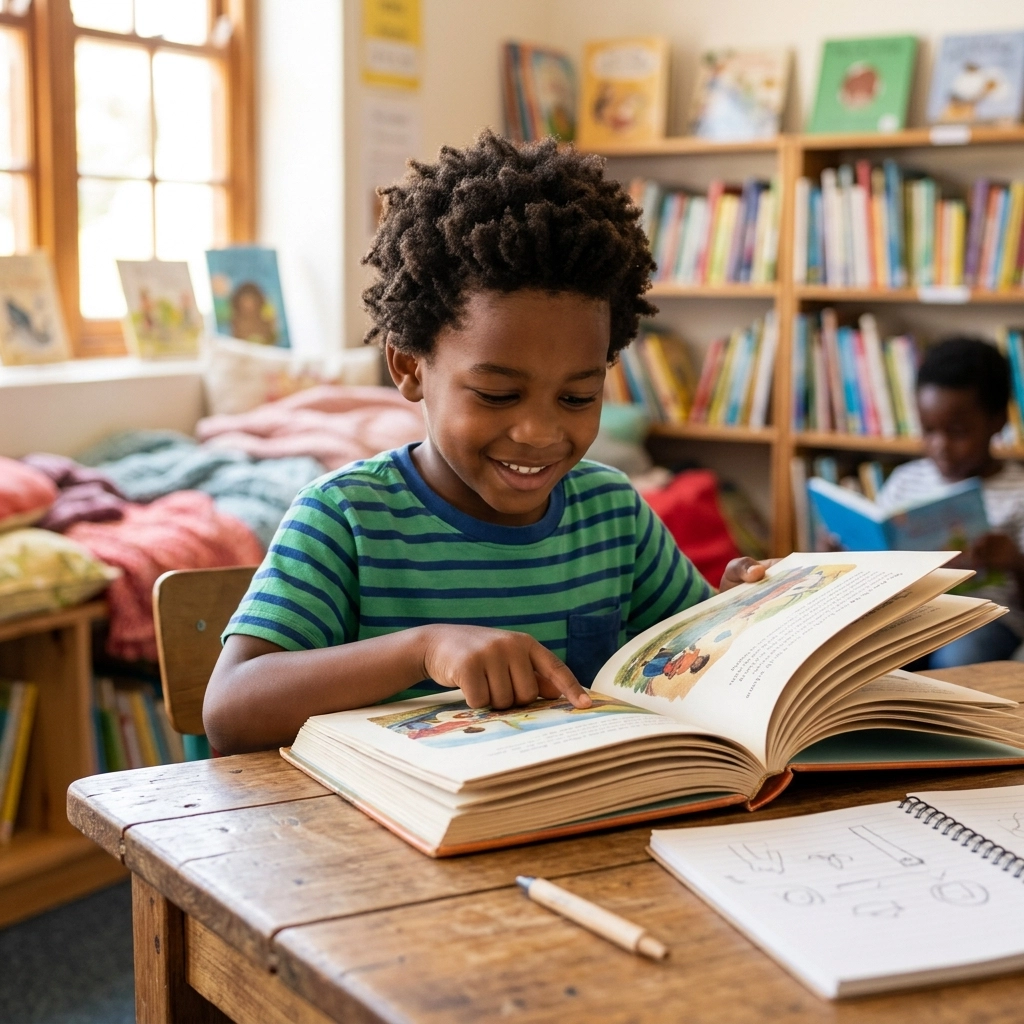
Think about the last time you read a physical book. You felt the weight of it in your hands. You felt the texture of the paper, some are smooth and glossy, others are thick and slightly grainy. For a child, this tactile feedback is a huge part of the learning process.
When a child holds a book, they aren’t just looking at words; they are engaging their sense of touch. They learn how to turn pages without tearing them (a fine motor skill in itself!). They feel the physical progress they are making as the stack of pages on the left gets thicker while the stack on the right gets thinner.
This physical sense of “where I am in the story” helps with memory and sequencing. On a screen, everything is flat. You scroll and scroll, and it all feels the same. But with a book, that specific plot twist happened “near the bottom of a left-hand page about halfway through the book.” That spatial anchoring is a powerful tool for comprehension.

The “old book smell” and why it matters
It might sound a bit nostalgic, but the smell of books, often called “bibliosmia”, is a real thing. Whether it’s the crisp, sterile scent of a brand-new hardback or the slightly vanilla, musty scent of a well-loved library book, these smells create strong emotional triggers.
Smell is the sense most closely linked to memory. When a child associates the scent of paper and ink with a cozy afternoon spent reading with a parent, it builds a positive emotional bridge to literacy. They aren’t just “consuming content”; they are having an experience. Screens are sterile. An iPad smells like… well, warm plastic and glass cleaner. There’s no soul in that.
Better focus in a world of notifications
The “digital drain” is real. Even as adults, we find it hard to stay focused on a long article when a notification pops up, or an ad flashes, or we feel the urge to click a related link. For kids, whose impulse control is still a work in progress, a screen is a minefield of distractions.
A physical book is a “single-tasking” device. It doesn’t ping. It doesn’t have a “low battery” warning that sends everyone hunting for a charger. It doesn’t invite you to go watch a Minecraft video halfway through a chapter.
When a child sits down with a book, the world narrows down to just them and the story. This deep focus is exactly what we encourage in our Creative Writing Club for Kids and Teens. We want them to fall so deeply into their own imagination that they forget the rest of the world exists for a while. That kind of immersion is where the best ideas are born.

Helping creativity bloom
I’ve observed that when kids are used to the fast-paced, “instant gratification” nature of screens, their own writing can sometimes reflect that. They want the story to happen now. They skip the descriptions, the atmosphere, and the “slow” parts because their brains are wired for the next click.
Physical books teach patience. They teach the beauty of a well-placed adjective. Because the sensory experience of reading is slower and more deliberate, it allows the child’s imagination to fill in the gaps. On a screen, the visuals are often provided for them (think of interactive e-books). But with a physical book, the child has to “paint” the scene in their own mind.
That mental “painting” is the fundamental workout for a young writer. If they can visualize the dragon’s scales or the smell of the enchanted forest because they are already in a sensory-rich environment (the book in their lap), they are much more likely to describe those things vividly when they pick up a pen to write their own stories.
Bridging the gap: how to get them back to paper
If your house has become a 24/7 screen zone, don’t panic. You don’t have to throw the tablets out the window. It’s about creating a balance. Here are a few ways to reintroduce the magic of physical books:
- The weekly library trip: Make it an event. Let them roam the aisles and pick books based on the covers, the feel, or even the “cool” factor of a pop-up book.
- Model the behavior: If they see you scrolling on your phone, they’ll want to scroll. If they see you buried in a paperback, they’ll get curious.
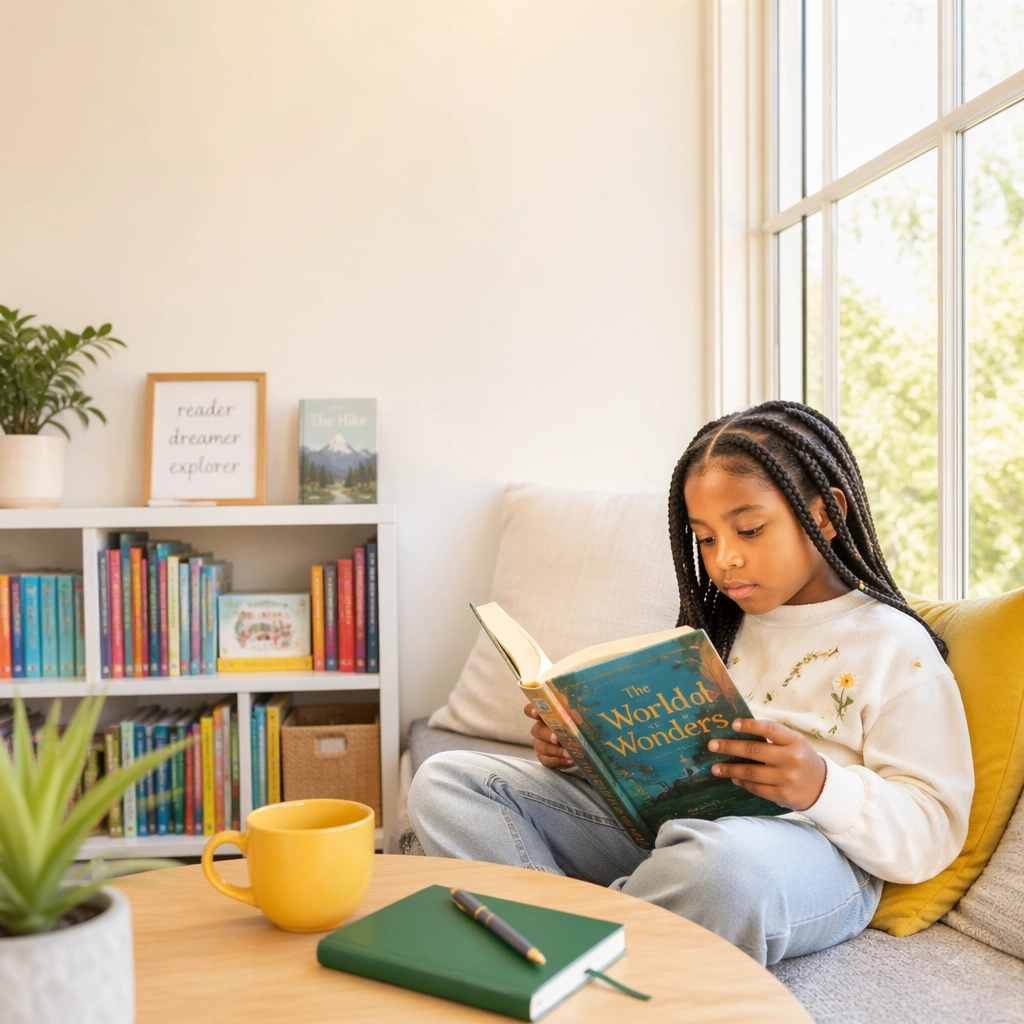
- Create a reading nook: A beanbag, a soft blanket, and a shelf of books. Make it a tech-free sanctuary.
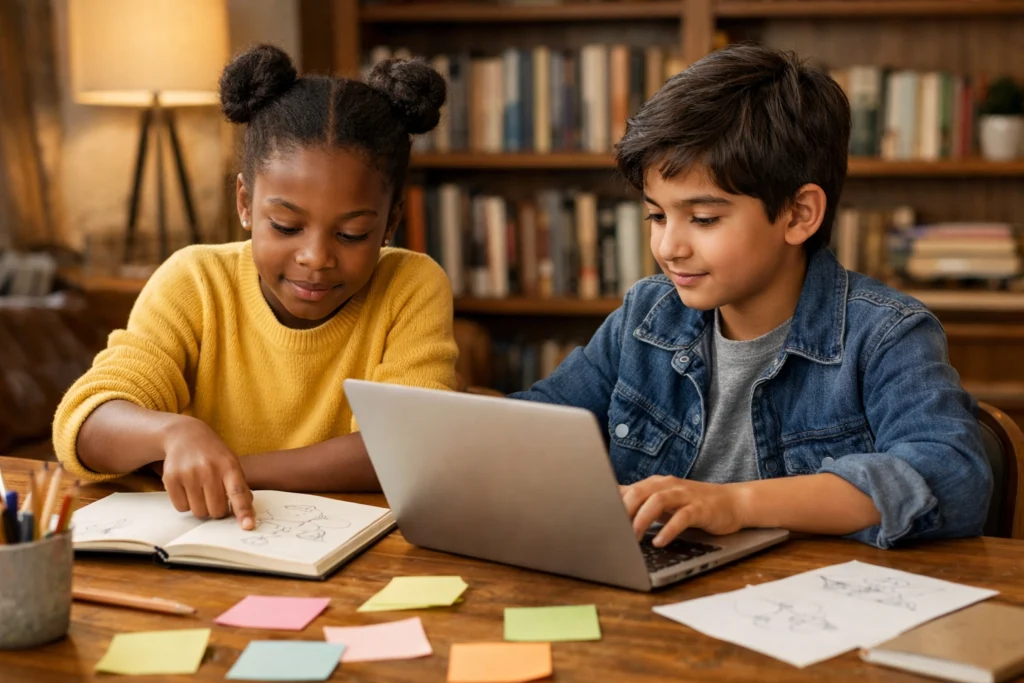
- Join a writing community: Sometimes, seeing other kids excited about books and stories is the best motivator. Our club focuses on that peer-to-peer inspiration.
Real talk: it’s not always easy
Switching from high-stimulation games to a “quiet” book can result in some grumbling. Kids might say they’re “bored” at first. But boredom is actually a gift. Boredom is the space where the brain starts to look for its own entertainment. It’s where the “what if?” questions start to bubble up.
“What if this book was about a girl who lived in a treehouse?”
“What if the dog in this story could actually talk?”
Once those questions start, you’ve won. You’ve moved them from being a passive consumer to an active creator.
At Accomplish Press, we love seeing that shift. Whether we are helping an author navigate the business of self-publishing or helping a 10-year-old finish their first short story, the goal is always the same: to foster a deep, lasting love for the written word.
Ready to let their creativity bloom?
If you have a young reader who loves stories, or perhaps a reluctant reader who just needs the right spark, I would love to help.
At Accomplish Press, we offer more than just publishing services. We are dedicated to nurturing the next generation of storytellers. Our Creative Writing Club for Kids and Teens is a supportive, friendly space where we prioritize that deep connection to stories. Whether your child is a budding novelist or just starting to find their voice, my coaching and courses provide the structure and encouragement they need.
Want to learn more?
Reach out to me directly. Let’s help your child put down the screen and pick up the pen (and the book!). Together, we can make sure their creativity doesn’t just survive the digital age: it thrives in it.
Happy reading (and writing)!