


Your child just announced they want to write a book. Maybe they’re seven and want to write about unicorns, or maybe they’re fourteen with dreams of crafting the next dystopian masterpiece. Either way, you’re probably thinking: How do I help without completely messing this up?
Supporting a young writer isn’t about becoming their editor-in-chief or their biggest critic. It’s about creating space for their creativity to flourish while giving them the tools and confidence they need to keep going. And trust me, there will be moments when they need that encouragement.
Start with the right environment (not just a fancy desk)
First things first: your child needs a place to write. But before you rush out to buy an expensive desk, remember that some of the world’s greatest authors started writing on kitchen tables, park benches, and bedroom floors.
What matters more than fancy furniture is consistency. Set up a designated writing spot, even if it’s just a corner of the living room, where your child can leave their notebooks, pens, and half-finished stories without them getting swept away with the dishes.
Stock this space with the basics:
- Notebooks (lots of them, kids lose things)
- Pens, pencils, markers, coloured pencils
- A small dictionary (yes, physical books still matter)
- Index cards for character notes or plot ideas
- Maybe a small bulletin board for inspiration
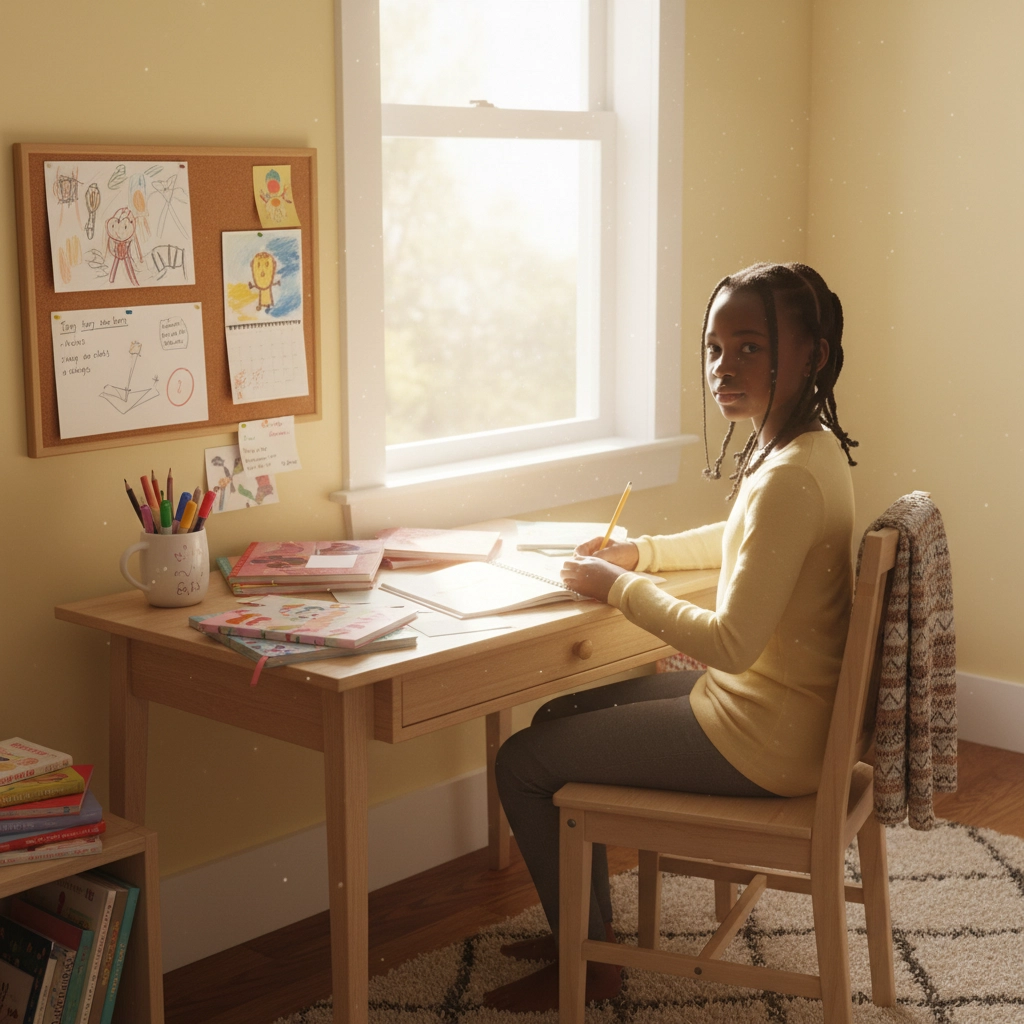
The goal is to make writing feel accessible. If your child has to hunt for a pen every time inspiration strikes, that spark might fizzle out before they even start.
Nurture the creative spark (even when stories get weird)
Your child’s first stories might not make complete sense. They might write about flying cats who solve crimes or princesses who run intergalactic businesses. Resist the urge to point out logical inconsistencies or suggest more “realistic” plots.
Instead, ask questions that show you’re genuinely interested:
- “Tell me more about this character, what makes them special?”
- “What happens next in the story?”
- “How did you come up with this idea?”
These questions do two important things: they show your child that their ideas matter, and they help develop their storytelling instincts. Every professional writer started with weird, wonderful, sometimes nonsensical stories. That’s part of the process.
Encourage different types of writing too. Maybe your child isn’t interested in novels but loves writing songs, poems, or even elaborate text messages to friends. All of it counts as creative writing practice.
Handle the inevitable “my writing is terrible” moments
Every writer, from kindergarteners to bestselling authors, goes through periods of doubt. Your child will eventually declare their writing is “stupid” or “boring” or “not good enough.” This is normal, but it’s also where many young writers give up.
When these moments hit (and they will), avoid dismissive responses like “Don’t be silly, it’s great!” Instead, acknowledge their feelings while redirecting their focus:
“I can see you’re frustrated with this story. That actually shows you’re thinking like a real writer, most authors rewrite their work many times. What part are you having trouble with?”
Sometimes kids get stuck because they’re comparing their work to published books. Remind them that every book they love went through multiple drafts, editors, and revisions before reaching their hands.

Find age-appropriate resources and support
As your child’s interest in writing grows, they’ll benefit from resources beyond what you can provide at home. This doesn’t mean you’re failing as a supportive parent, it means you’re smart enough to recognize when expert guidance would help.
For younger writers (ages 6-10), look for:
- Picture books about the writing process
- Simple writing prompts and games
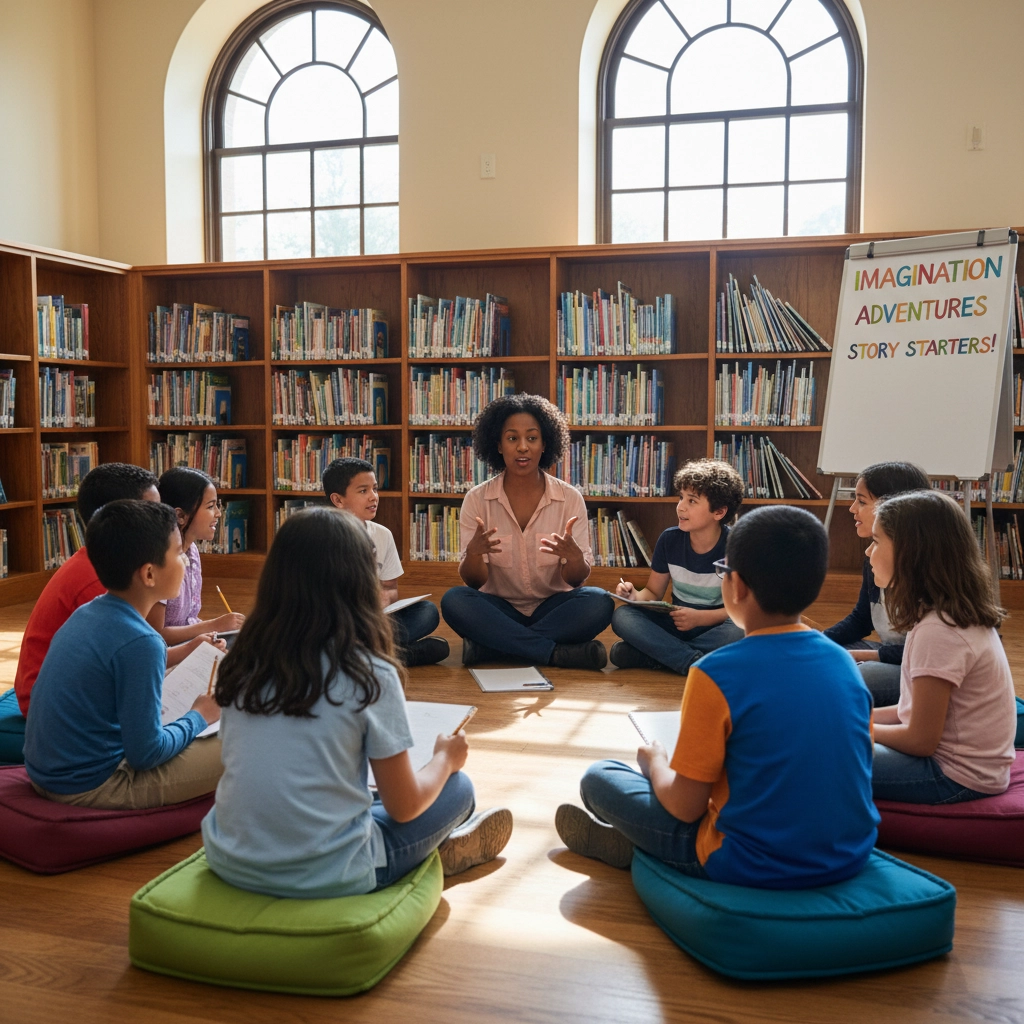
- Local library writing workshops for kids
- Online writing activities designed for their age group
For older kids and teens (ages 11+), consider:
- Creative writing courses specifically designed for young writers
- Writing classes for kids that focus on different genres
- Books about the craft of writing (age-appropriate versions)
- Online writing classes that offer flexibility around school schedules
The key is finding resources that match your child’s current skill level and interests. A reluctant writer might respond better to a fun, low-pressure creative writing course, while a serious young author might thrive in a more structured program.
Know when to consider a Writing Coach
Sometimes kids need more personalized guidance than group classes can provide. A kids writing coach can offer one-on-one support tailored to your child’s specific needs and goals.
Consider professional coaching if your child:
- Has been writing consistently for several months
- Expresses serious interest in improving their craft
- Gets frustrated with their progress despite your encouragement
- Wants to work toward specific goals (like completing a first book)
- Would benefit from feedback from someone outside the family
A good writing coach for young people understands how to balance encouragement with constructive criticism. They know how to challenge kids without overwhelming them, and they can provide structure that helps turn big dreams into achievable steps.
Celebrate small wins (they matter more than you think)
Publishing a book is a long-term goal, but celebrating small milestones keeps young writers motivated along the way. Make a big deal when your child:
- Finishes their first complete story (even if it’s only three pages)
- Creates an interesting character with a detailed backstory
- Writes consistently for a week straight
- Shares their work with someone new
- Overcomes a particular writing challenge
You might create a “publishing party” where your child reads their latest story to family members, or help them make simple booklets of their work to share with grandparents or teachers.
These celebrations reinforce that writing is valuable work worthy of recognition, long before any external validation might come along.
Don’t forget the reading connection
The best writers are almost always voracious readers. Make sure your child has access to plenty of books in their preferred genres, and don’t worry if they’re reading “below their level” or choosing books you consider lightweight.
The goal is to develop a love of stories and an intuitive understanding of how language works. A child who devours graphic novels is still learning about pacing, character development, and dialogue, all skills that will enhance their writing.
Visit libraries and bookstores together. Let your child pick books that interest them, even if their choices surprise you. And yes, audiobooks absolutely count as “real reading.”
Support their individual path
Not every child who wants to write a book needs to follow the traditional novel-writing path. Some kids are natural poets, others excel at short stories, and some discover they love writing scripts for plays or screenplays.
Pay attention to what naturally energizes your child. Do they love creating elaborate backstories for characters? Maybe they’re drawn to fantasy world-building. Do they enjoy writing realistic dialogue? They might have a gift for contemporary fiction or plays.
Supporting your young author means helping them discover and develop their unique voice and interests, not pushing them toward what you think “serious writing” should look like.
When writing becomes more serious
If your child maintains their interest in writing over time and starts talking about “real publishing” or professional goals, you might need to level up your support. This could mean:
- Researching publishing courses that teach young writers about the industry
- Helping them find appropriate contests or submission opportunities
- Connecting with other serious young writers through programs or camps
- Supporting their decision to invest more time in their craft
Remember, there’s no rush. Some kids benefit from early, structured support, while others need to explore and play with writing for years before getting serious. Follow your child’s lead.
Supporting a young writer is really about creating an environment where creativity can flourish without pressure, where setbacks are treated as learning opportunities, and where writing is valued as both an art form and a means of self-expression.
If your child is showing serious interest in developing their writing skills, consider exploring professional support through creative writing programs designed specifically for young authors. Whether through group courses or individual coaching, sometimes the guidance of an experienced writing coach can help transform a child’s natural storytelling instincts into polished writing skills that will serve them for life.